

Updated:2026.06.18
Creating a space turning dreams into reality - Yuriko Takenaka & Yuri Shirai, Sales Team, WeWork Japan
Tag
WeWork Japan operates over 40 locations across the nation (as of March 2026). By continuously opening new locations and expanding existing ones, the company continues to grow and create new value in workspace. At the forefront of this, the corporate sales team communicates the benefits of becoming a WeWork member and proposes optimal usage plans. The team is currently expanding its workforce to accommodate the increasing number of inquiries and requests from companies. We asked two employees working at WeWork, a company that offers unparalleled value as a flexible office, about their reasons for joining, their career paths, their actual job duties, and the unique characteristics of the WeWork workplace.
What it’s like to work at WeWork
– A globally expanding flexible office company that continues to grow through new office openings and expansions.
– A culture where colleagues with diverse backgrounds respect one another and support each other’s challenges.
– A flat and open organization from the front lines to the management level.
– Workplaces located directly connected to or within walking distance of major train stations.
– Easy access to paid leave, maternity/paternity leave, and flexible working styles through the full flex system*.
– Awarded Eruboshi certification, Kurumin certification, and PRIDE Index Gold, reflecting a diverse workplace environment.
*For headquarters employees.
A fateful encounter led to the decision to join
――To begin, could you please introduce your respective departments and missions?
Yuriko: I belong to the Growth Partnership (GP) team. This team is responsible for helping clients considering an office space understand the appeal of WeWork, in collaboration with brokerage firms. I spend my days guiding clients who request site tours, primarily based out of our Tokyo locations. While not very frequent, I do occasionally travel to remote locations.
Yuri: Before I took maternity leave, I was in the same GP team as Yuriko, but upon returning to work, I moved to my current leasing team. Our mission involves responding to inquiries received through the internet, including our website, and providing proposals and follow-up support based on the business growth of our existing members.
――What was the career path that led you to join WeWork, Yuriko?

Yuriko Takenaka, Senior Account Manager, Growth Partnership, WeWork Japan
Yuriko: I previously worked in corporate sales at a Japanese hotel chain. My main task was to attract international clients; for example, I would encourage bands to stay with us when they came from abroad. I worked to secure bookings not only for artists but also for international dignitaries visiting Japan. However, as the company was a traditional Japanese firm, I felt that a U.S.-based company like WeWork would offer more opportunities for women to excel, which led me to apply.
――I heard that the way you discovered WeWork was a bit unusual.
Yuriko: Actually, during my job hunt, I discovered WeWork for the first time because a company I visited for an interview was using it. I didn’t end up joining that company, but I saw that WeWork was hiring at their community bar (reception counter) and applied.
When I joined, I worked in the community team, which interacts most closely with our members (contracted clients). Although I aimed to work in sales eventually, I believed that unless I truly felt the appeal of WeWork firsthand and internalized it, I wouldn’t be able to convey it effectively to those considering our services.
――Could you tell us about your path to joining, Yuri?
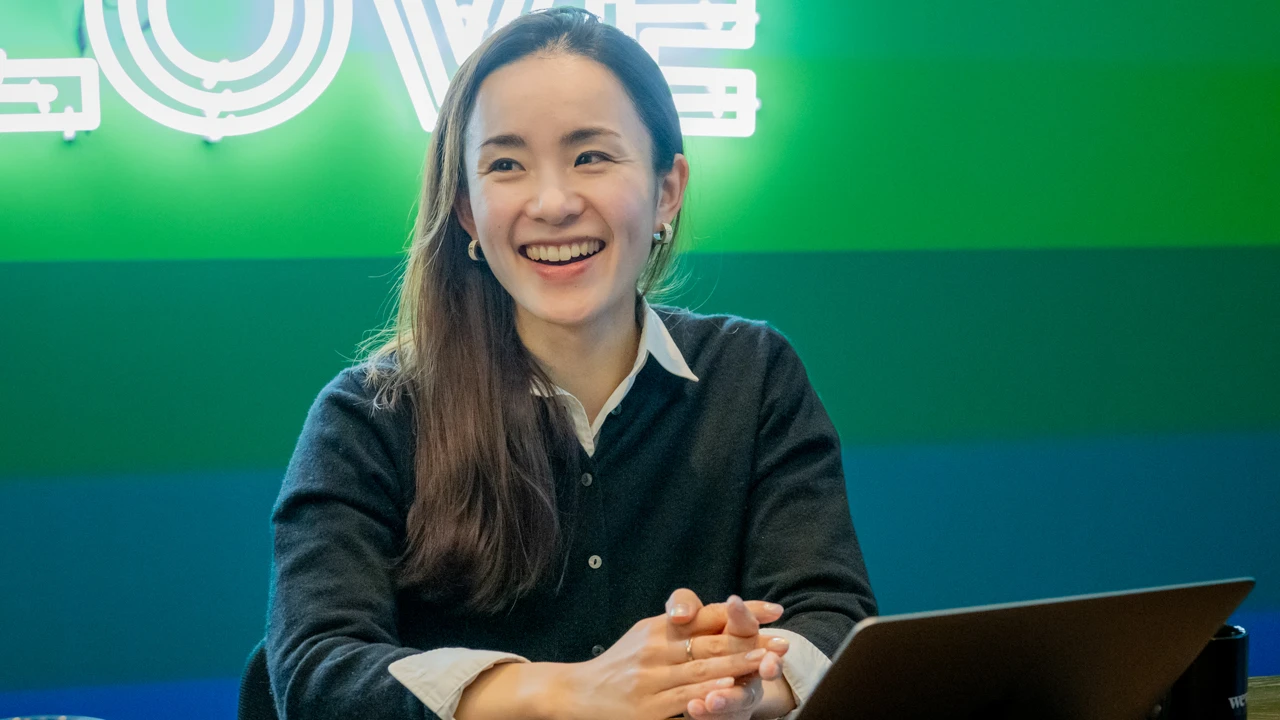

Yuri: I was really drawn to WeWork’s philosophy of “Do What You Love.” It was almost like love at first sight; I sent a message through a job site, received a reply, and after an interview, I was hired.
WeWork is my fourth company. I had always worked in sales at advertising, sales promotion, and recruitment companies. Since WeWork was my first time doing sales in real estate services, I was confused at first.
However, even as technology continues to advance and business meetings can be held entirely remotely in the future, I have always preferred communicating while meeting people in person to feel their energy. WeWork’s environment, where employees and members, as well as members themselves, interact in a flat and open way, feels like a perfect fit for me.
More locations, more inquiries, more sales
――Why is the sales team looking to add more members right now?
Yuriko: I joined WeWork in 2019, the year after it launched in Japan. Back then, because we had just arrived, we were busy every day just trying to fill vacancies. Today, our brand awareness has grown, and there are even some locations where we have no vacancies left to offer. Conversely, the market for flexible office space itself has expanded, and user fluidity has increased. To respond to this situation, while we are increasing our capacity through opening new locations and expanding existing ones, we have also reached a point where we need to strengthen our sales team so that more people can experience the convenience and appeal of WeWork.
Yuri: I joined WeWork around the same time as Yuriko. In the beginning, it felt like we were opening a new location every month. On the other hand, the pandemic followed, and the business environment changed drastically overnight. We were constantly chasing after these changes, so the past few years have truly been a turbulent time. However, the reason we were able to get through it was that our employees themselves had a high level of flexibility. Every person working at WeWork understood the current situation and was able to think for themselves and take initiative. Moving forward, we want more colleagues who can empathize with that way of working to join us.
Inclusive environment, flexible work style

――I heard that you both have children. From your perspective, is WeWork an easy place to work?
Yuriko: I returned to work after about a year of maternity and childcare leave. Since I am raising a child, there are times when I need to handle school drop-offs or unexpected situations. In that sense, WeWork is very helpful because I can work flexibly. I belong to the GP team, so I mainly communicate with brokerage firms and handle building tours from around 9:00 AM to 6:00 PM every day. There is no designated workplace, so I open my laptop and work from home or from the lounge of any WeWork location.
Regarding childcare leave, a characteristic of WeWork is that many men take it as well, and there have even been cases where they took a full year. I often hear about companies where maternity leave rules are in place, but there is no precedent, making it difficult to actually bring up the topic. At WeWork, there are many precedents, so you can use it without feeling hesitant.
The ease of taking paid leave and the full flex time system also contribute to a comfortable work environment. When raising a child, you might face sudden issues like a fever, but even in those times, I can handle it with a half-day or a full day of paid leave. The fact that many staff members have children makes it easy to get understanding, which is a huge help.
Yuri: I am also raising a child while working. On days when I have tours, I sometimes stay at that location to work. Other than tours, however, there are almost no restrictions on place or time, so I can move at my own pace. WeWork has 30 locations in Tokyo alone (as of March 2026), so the degree of freedom is high in that regard as well. If I don’t have a tour, working from home is also an option. Basically, as long as I am in an environment where I can focus, it is left to individual discretion.
That said, when I am at a WeWork location, my “work switch” turns on (laughs), so I often head out to a location to work. Among them, I choose different locations based on my needs, such as “this location for when I really want to focus.”
To pave a new way of working
――If someone asked you, “What kind of workplace is WeWork?”, what would you say?
Yuri: I think it is an open workplace where things are flat and you don’t feel any barriers. I feel it is a place where everyone can express their personality and be recognized without being conscious of educational background, past experience, or age. There is a culture at WeWork of calling each other by our first names, and I think that is a reflection of that flat mindset.
Yuriko: The fact that it is an open workplace is evident from the fact that we maintain relationships with former WeWork employees, and that many people who leave eventually return. Since many of the employees are relatively young, there are people who leave WeWork to test their own strength somewhere else, only to return later. I think there are things you only notice after leaving and looking at WeWork from the outside.
――There is an image that many people working at WeWork are fluent in English. Is English proficiency a must?
Yuri: For the sales roles we are hiring for this time, there are some cases where English conversation skills are required or some materials are in English, but it is a “nice to have” rather than a “must.” We are currently looking for corporate sales skills and experience above all else. If you are also fluent in languages, that is even better.
If you have business-level English skills, we may assign you tasks that leverage your strengths, such as managing global accounts.
――What kind of person do you think is a good fit for WeWork?
Yuri: Someone with a sense of agency who can think and act for themselves. In sales, both GP and leasing have an aspect of being a “semi-order planner.” Customers interested in WeWork have various requests. It’s about thinking how to fit those needs and making proposals that satisfy them. Of course, the base plan is already set, so it’s about thinking how much you can customize it and how you can bring it closer to what they want.
Sometimes, we think together with the client not only about plans and hardware, but also about the number of desks, the number of All-Access accounts, and the way of working and operations using WeWork, especially for companies that used to work in conventional offices that are different from a workspace like WeWork.
Being able to put our heads together like that and stay connected with the companies that decide to move in is also the appeal of our role in sales. In most regular sales jobs, once you sell a product, you pass the baton to someone else, and communication with that customer usually cuts off. But at WeWork, the relationship continues for a long time afterward. It is a great joy for us to see companies move in on a small scale, grow over time, increase their desk count, and share that joy with them. I hope to work with people who find joy in things like this.
Yuriko: WeWork is not a company where the manual is set in stone. I find that attractive. At the hotel where I worked previously, I was taught never to say “no” to a customer, and I think that sense of adjusting and making things work by being creative even when something seems impossible is very similar. Yuri expressed it as a “semi-order planner,” but I feel it is “solution sales” where we think together with the customer, so I feel we have a similar image. What is necessary is an understanding of the WeWork product and the ability to listen to the customer’s voice.
――Since it is a sales role, I assume there is something to sell. What exactly is WeWork selling?
Yuri: Physically, it means selling a space, but I think we are selling things that are invisible but irreplaceable: an ideal way of working, a new way of being for workspaces, a community, and new encounters between people.
Yuriko: I often hear happy stories from people at companies that have moved in, saying, “Coming to the office has become fun for our employees, and our attendance rate has gone up.” Personally, when I hear stories like that, I feel that we are “selling motivation.”
――Finally, do you have a message for those interested in WeWork?
Yuriko: WeWork has a mentality of “let’s give it a try” rather than not doing something for fear of failure. I want to build WeWork together with people who can use their imagination and take the initiative themselves.
Yuri: I would be happy if positive people who have a sense of ownership, enjoy challenges, and have the drive to see things through to the end joined our team. WeWork has a culture of supporting and cheering for people who take on those kinds of challenges. By the way, clothing, hair color, and nails… no corporate restriction and all up to you!
*All the key facts, stats, and details as of April 2026.